
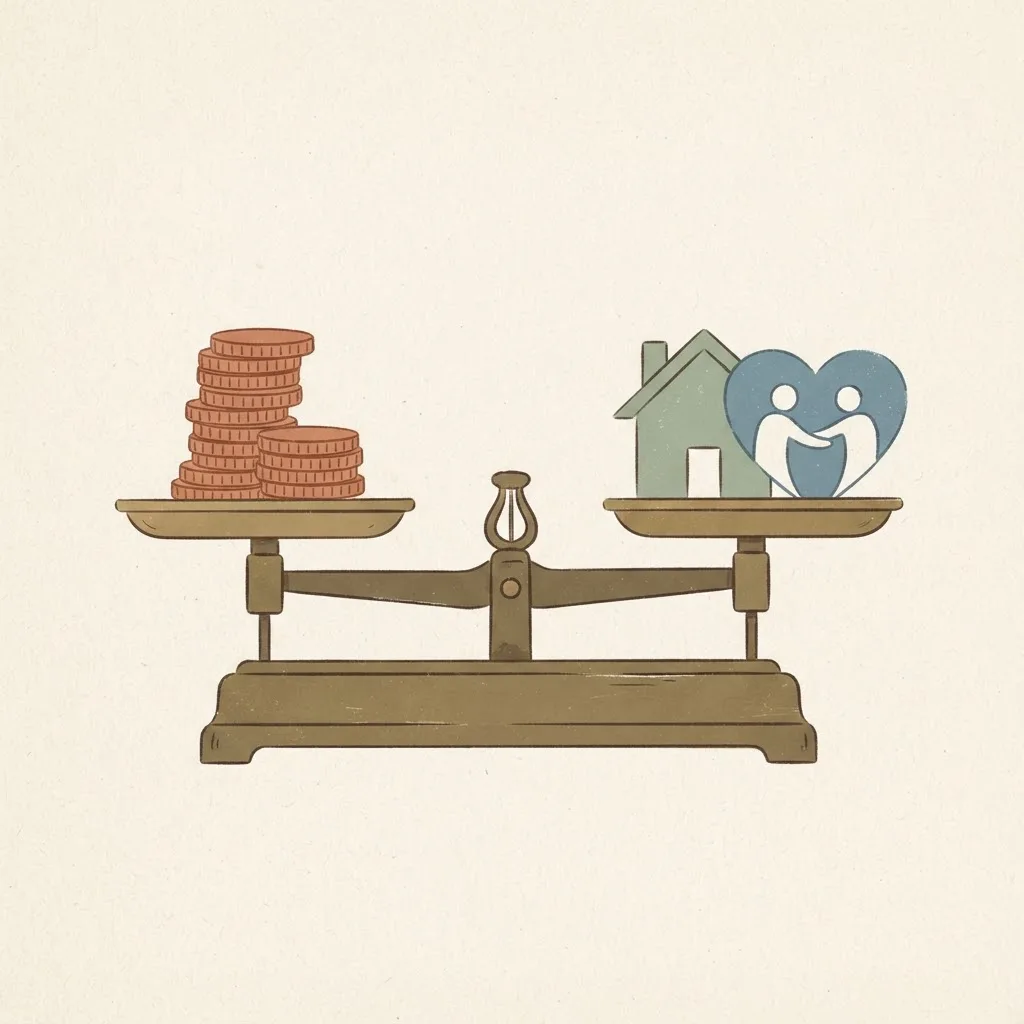
When one partner stays home with the kids, the question is not really “Who pays the bills?” The better question is: how do we treat every contribution to the household fairly?
A stay-at-home parent may not have a paycheck, but they are still contributing time, labor, and often the cost of not working outside the home. Treating that household as if one person earns 100% and the other contributes 0% can create dependence and resentment. A 50/50 split can be just as disconnected from reality.
There is no single correct setup for every couple. But there is a useful starting point: shared household costs should be treated as a shared responsibility, while both partners should have access to money and a personal spending amount.
First, separate shared costs from personal costs
Before choosing a split, make a list of the expenses you are actually trying to divide. Shared costs usually include housing, utilities, groceries, childcare, insurance, transportation for family needs, and savings goals you both agreed to.
Personal costs might include individual hobbies, gifts, private subscriptions, personal debt from before the relationship, or spending that only benefits one person. The line will look different for every couple, but naming it out loud prevents a grocery bill from becoming an argument about the entire relationship.
If you want a practical starting point, the Halfway couples budget calculator can help you map shared costs before deciding how to fund them.
Why a 50/50 split often misses the point
If one partner earns the household income while the other provides full-time childcare and home labor, splitting the bills 50/50 is not possible unless the stay-at-home partner has separate assets or another source of money. More importantly, it can imply that only paid work counts as a contribution.
The opposite extreme can cause problems too. If every dollar goes into one person’s account and the other partner has to ask for money for ordinary needs, the arrangement can become financially isolating. A fair system should protect the household and the independence of both people.
So ask yourself: if both partners are working for the household, does your money system give both of you security, visibility, and a reasonable amount of choice?
Three ways couples can organize the money
1. One shared pool
Both incomes, if there are two, go into a joint account. Shared bills, savings, and personal spending amounts come out of the same plan. This is simple and can work well for couples who see income as completely shared.
The important detail is that “shared” must mean shared access. Both partners should be able to see the accounts, understand the monthly plan, and spend a personal amount without requesting permission for every small purchase.
2. Shared costs plus equal personal amounts
The working partner funds the shared account, and both partners receive the same personal spending amount. This recognizes that the stay-at-home parent should not be left with no money of their own just because their contribution is unpaid.
For many families, this is less about splitting a bill and more about creating equal access to the household’s resources.
3. A proportional contribution, with caregiving included
If both partners have some income, each can contribute a percentage of their take-home pay to shared costs. If one partner has no income because they are providing full-time care, the household may reasonably treat the caregiving role as that partner’s contribution and fund shared costs from the working income.
For couples with two incomes, the Halfway fair split calculator shows the basic math. It calculates each person’s share based on income rather than assuming that equal dollars automatically mean equal effort.
A worked example
Imagine Sam earns $6,000 per month after taxes. Jordan stays home with their two children and has no current paycheck. Their shared monthly costs are:
- Housing and utilities: $2,400
- Groceries and household supplies: $900
- Transportation and insurance: $700
- Child-related costs: $500
- Shared savings: $500
The household total is $5,000. A literal 50/50 split would ask Jordan to find $2,500 despite having no current income. That is not a workable split. A more honest plan is for the shared household income to fund the shared household costs, while both partners receive an agreed personal amount.
For example, Sam and Jordan might each receive $500 of personal spending money, with the remaining $4,000 covering shared expenses and savings. The exact number depends on their priorities, but the principle is clear: Jordan’s unpaid caregiving is treated as part of the household contribution, not ignored because it does not appear on a pay stub.
Build in protection for the stay-at-home partner
A fair monthly split is only one part of the arrangement. The stay-at-home partner should also have a clear view of the accounts, access to emergency funds, and a voice in major financial decisions.
Many couples also plan for retirement contributions, insurance coverage, and money in each partner’s name. Those choices can have legal and tax consequences, so it may be worth speaking with a qualified financial or legal professional about your situation. The goal is not to make one partner dependent on goodwill. It is to make the household’s plan resilient if income, health, or the relationship changes.
Review the split when the season changes
Having a stay-at-home parent may be the right choice for one season and not another. Revisit the arrangement when a child starts school, childcare changes, someone returns to work, or the household takes on new debt.
Put a short money meeting on the calendar once a month. Review shared costs, personal amounts, upcoming changes, and whether both partners still feel the system is fair. You do not need to renegotiate the entire relationship every month. You do need a place to say, “This is not working anymore,” before frustration does it for you.
The fairest bill split is not always the one that produces two identical payments. It is the one that recognizes paid work, unpaid work, shared goals, and both partners’ ability to live with dignity. Start with the numbers, then make sure the numbers reflect the life you are actually building together.