
Money is still the number one reason couples fight in 2026. Not kids. Not in-laws. Money.
Here's the stat everyone's talking about: 70% of Americans feel stressed about their finances right now. And when you're stressed about money, you're less likely to talk about it with your partner, which just makes everything worse.
If you've been avoiding the budget conversation because you're afraid it'll turn into an argument, you're not alone. But here's what actually works.
Why the 50/50 Split Doesn't Work Anymore
The traditional approach sounds fair: split rent 50/50, groceries 50/50, everything down the middle.
But when one partner makes $75,000 and the other makes $45,000, that $1,800 rent payment hits very differently.
For the higher earner, $900 is about 14% of their monthly gross income. For the lower earner? It's 24%. Same apartment, completely different financial pressure.
This is why couples are switching to income-based splitting in 2026.
The 50/30/20 Rule Everyone's Using
If you've been on TikTok or any financial app lately, you've seen the 50/30/20 rule going viral. It's simple:
- 50% of your take-home pay goes to needs (rent, groceries, utilities)
- 30% goes to wants (date nights, hobbies, that coffee habit)
- 20% goes to savings and debt payoff
But here's the catch: when you're splitting bills as a couple with unequal incomes, you need to apply this rule proportionally, not equally.
How Income-Based Splitting Actually Works
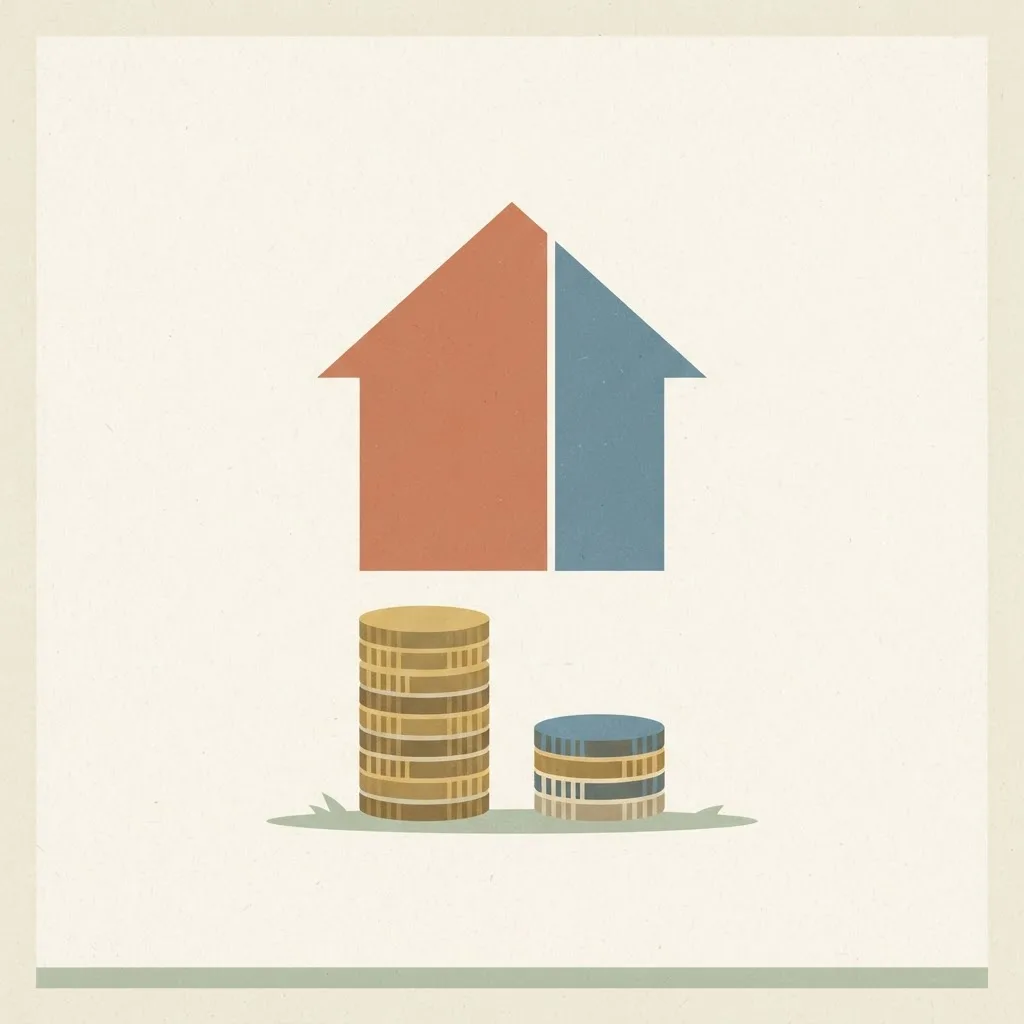
Let's say your combined household income is $10,000/month. You make $6,000, your partner makes $4,000.
You cover 60% of shared expenses. They cover 40%.
Total shared expenses of $3,500/month? You contribute $2,100, they contribute $1,400.
What's left is yours individually, to save, spend, or budget however you want using that 50/30/20 framework.
The result: Both of you have proportionally equal money left over. No resentment. No guilt. Just math that actually reflects reality.
Couple's Budget Calculator
Your 2026 Goals, Simplified
Emergency fund first. Aim for 3-6 months of expenses. Start with $1,000 if that feels more doable.
Pick 2-3 big goals together. Not ten. Maybe it's "save $8,000 for a trip to Japan" or "pay off $5,000 in credit card debt by December."
Track monthly, adjust quarterly. Life changes. Incomes shift. Your budget should flex with you.
The Tool That Makes This Easy
Want to skip the spreadsheet math? Download our free 2026 Couples Budget Template and see exactly how much each of you should contribute based on your actual incomes.
It does the calculations for you, just plug in your numbers and you're done.
Because the hardest part isn't the math. It's having the conversation. And starting 2026 with a plan you both agree on? That's the real win.